Handwriting Tattoo References: Prepare the Source Image
Prepare a clear handwriting source for a tattoo consultation while preserving the original wording and keeping cleanup decisions explicit.
Quick answer
Keep the original note, capture a clear copy without filters, and identify which marks and irregularities matter. A handwriting-inspired font is different from preserving a specific person’s writing.
A handwriting tattoo reference may begin with a letter, a card or a note from someone important to you. The source has a different role from a generic script font. Before cleaning the image, decide whether you want that particular writing preserved or simply a lettering style with a handwritten mood.
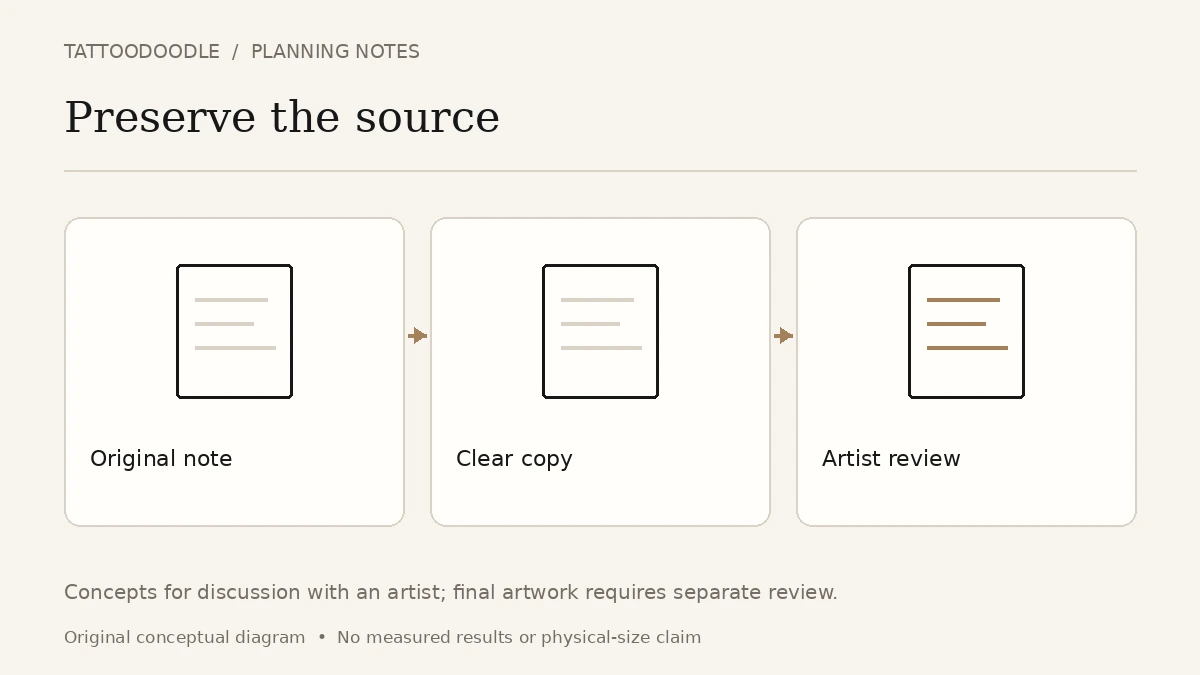
Original planning diagram; not a physical-size proof or completed tattoo.
Protect the original
Keep the physical note and an untouched digital copy. Work on duplicates when cropping or adding annotations. That makes it possible to revisit a faint mark or a letter that becomes unclear after editing.
Use material you are entitled to share and consider the writer's privacy. A page may contain addresses, contact details or unrelated messages. Crop a working copy to the relevant passage while retaining enough context privately to verify the wording.
Make a clear, neutral capture
Photograph the page with even lighting and the camera facing it as directly as practical. Avoid shadows across the words, reflected glare and decorative filters. A scan is another option if it captures the writing clearly without damaging the original.
Check the saved image at ordinary viewing size and enlarged. Confirm that the first and last characters are present and that a fold or paper texture has not been mistaken for an ink stroke. Do not redraw an uncertain character from memory and present the result as an untouched original.
Transcribe the words separately
Type the intended wording in a note beside the image. Mark any uncertainty rather than quietly guessing. If the passage is shortened, identify the selected words and discuss how a new arrangement changes the original line structure.
The transcription helps the artist read the image; it does not replace it. A font-generated version can show an alternative direction, but it is not evidence of the source person's handwriting. Keep those two kinds of reference labeled clearly.
State what can change
You may value an unusual letter shape, a particular connection or the uneven baseline. Explain those preferences and ask what the artist recommends for the custom drawing. Avoid assuming that every paper irregularity should be copied mechanically or that digital cleanup is always appropriate.
The lettering guide helps compare broader visual directions, while the design guide helps organize the consultation. Use the lettering studio only if you want a separate font-based comparison. Review the final drawing against both the source image and the verified words before confirming the design.
Make your own
Explore a tattoo concept with the AI generator (free usage is limited), preview lettering with the free font tool, or try a placement preview. AI design references are not professional tattoo-ready stencils.